Real battery SoH
Reads the state of health straight from the car’s BMS and logs it per trip — no third-party estimates.
DOC 07 Projects / MihariE · Android app · rev 2026.08
Battery state of health (SoH), the real degradation curve, per-trip consumption and 12 V auxiliary battery alerts — all via passive OBD/UDS reading, never writing to the car. 見張り means “to watch over”.
Generic OBD apps show the moment. MihariE builds the history — and the history is where an EV’s real health shows.
Reads the state of health straight from the car’s BMS and logs it per trip — no third-party estimates.
Builds the real degradation curve over months and years — the information that matters for resale and warranty.
The auxiliary battery is the most common cause of a “dead” EV. MihariE measures resting voltage and warns when it runs low — before it fails.
Detects every trip and logs distance, energy and efficiency (kWh/100 km) — with lifetime totals.
It only reads, never writes to the vehicle. The protocol was reverse-engineered and validated against the real dashboard, reading by reading.
The full history can be exported as a password-encrypted file and restored on another phone.

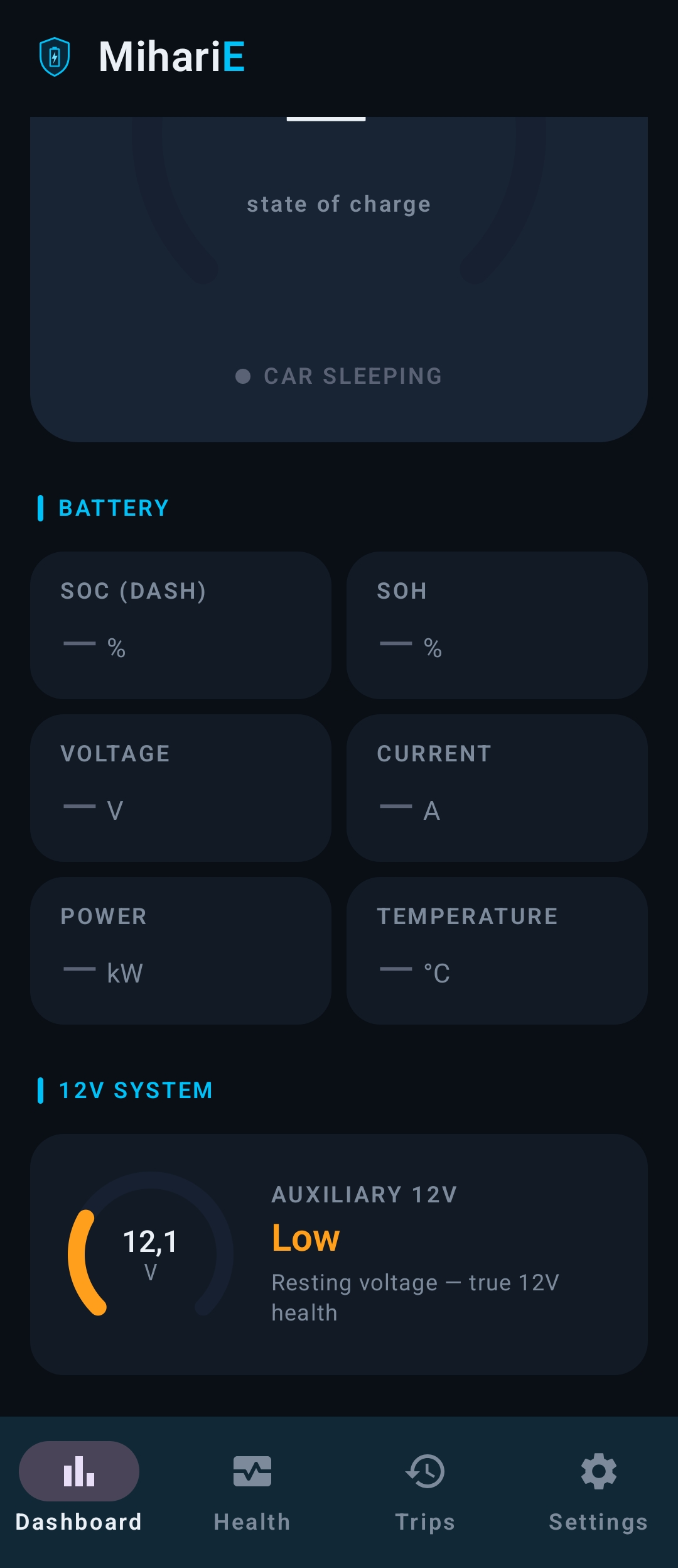
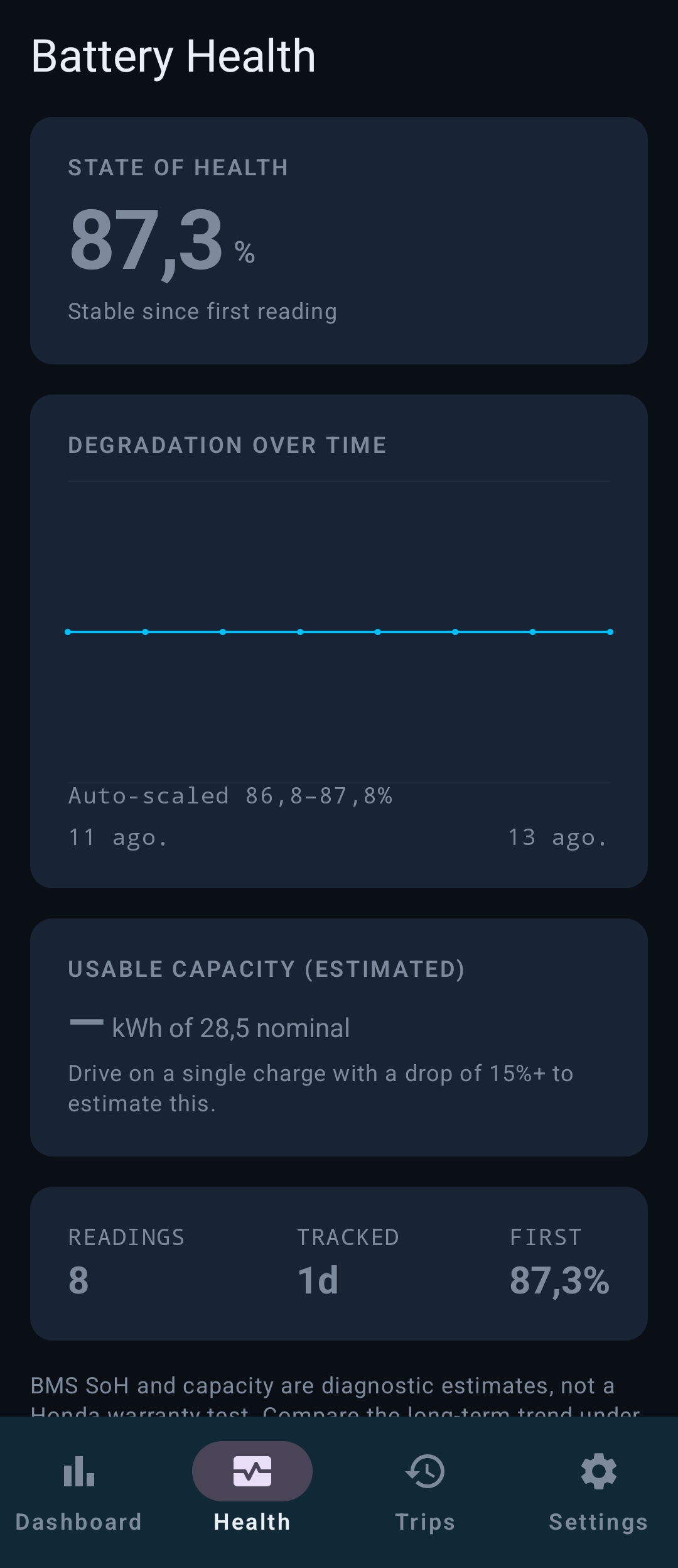
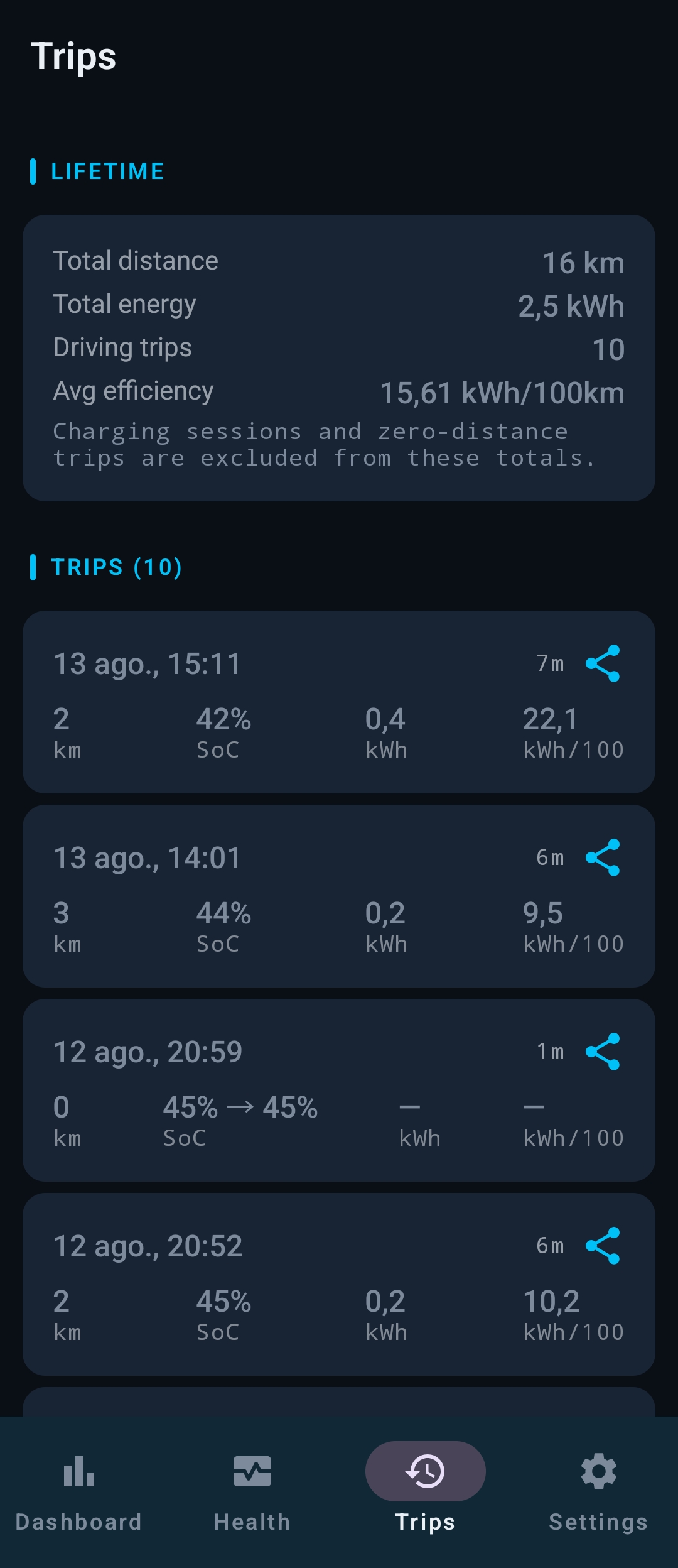
MihariE connects to the Honda e through a Bluetooth OBD adapter (for example, OBDLink MX+) and talks directly to the car’s ECUs over OBD/UDS. Much of this data is not documented by Honda — it took reverse engineering of the diagnostic protocol, with every reading validated against what the car’s dashboard shows.
The app reconnects on its own when the car is nearby, detects trips automatically and stores everything locally on the phone — your car’s data is yours, it never goes to any cloud.
If there is enough interest, RFAS will publish the app on Google Play at an accessible price — and, depending on uptake, an iOS version. Tell us you are interested: one line in the form is enough.