
DOC 04 Project register · 5 sheets · rev 2026.07
Where engineering meets code.
Short examples of the kind of problems RFAS solves. Some are plugins, others automated processes, others technical analyses. All share the same logic: simplify what was manual.
P·01
SketchUp → EPB
FIG. 012025 · Flanders
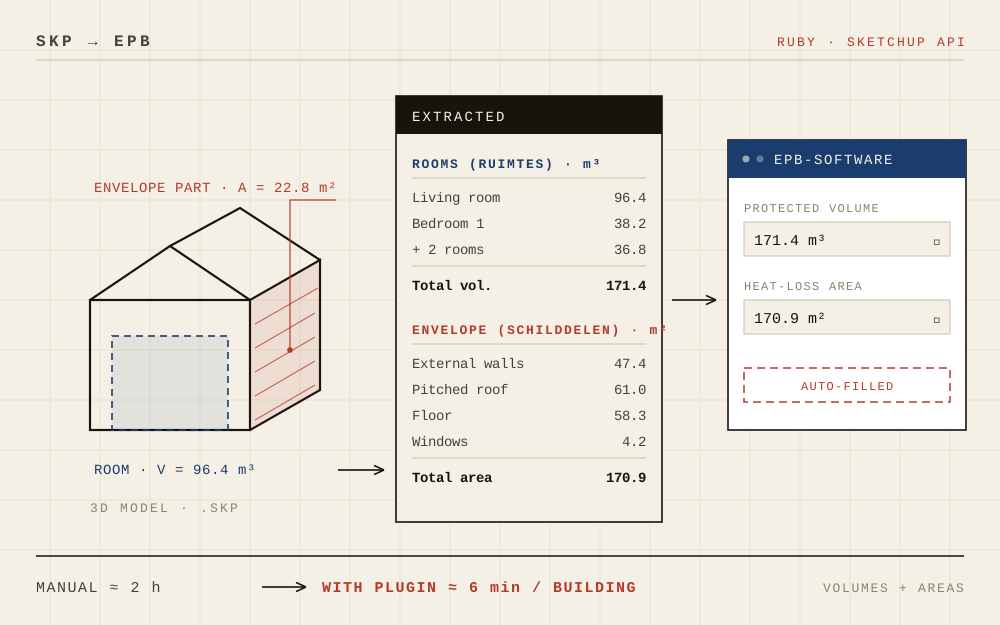
From the 3D model to EPB: volumes per space (ruimtes) and envelope areas (schilddelen).
PROJECT 01 2025 · Flanders
SketchUp → EPB
In Flanders' EPB energy certification, transposing the 3D model's geometry into the official software was hours of manual work: measure, add up, transcribe. This plugin automatically extracts the volumes per space and the areas of the envelope elements, with orientation, directly from the SketchUp model.
Two hours of manual work cut to six minutes per building — and no transcription errors.
- Context
- EPB energy certification · Flanders (Belgium)
- Scope
- Volumes (ruimtes) and areas (schilddelen), with orientation
- Stack
- Ruby · SketchUp API
- Result
- ≈ 2 h → ≈ 6 min per building
- Status
- In development
P·02
Sondar · CPT interpretation
FIG. 022025 · real capture
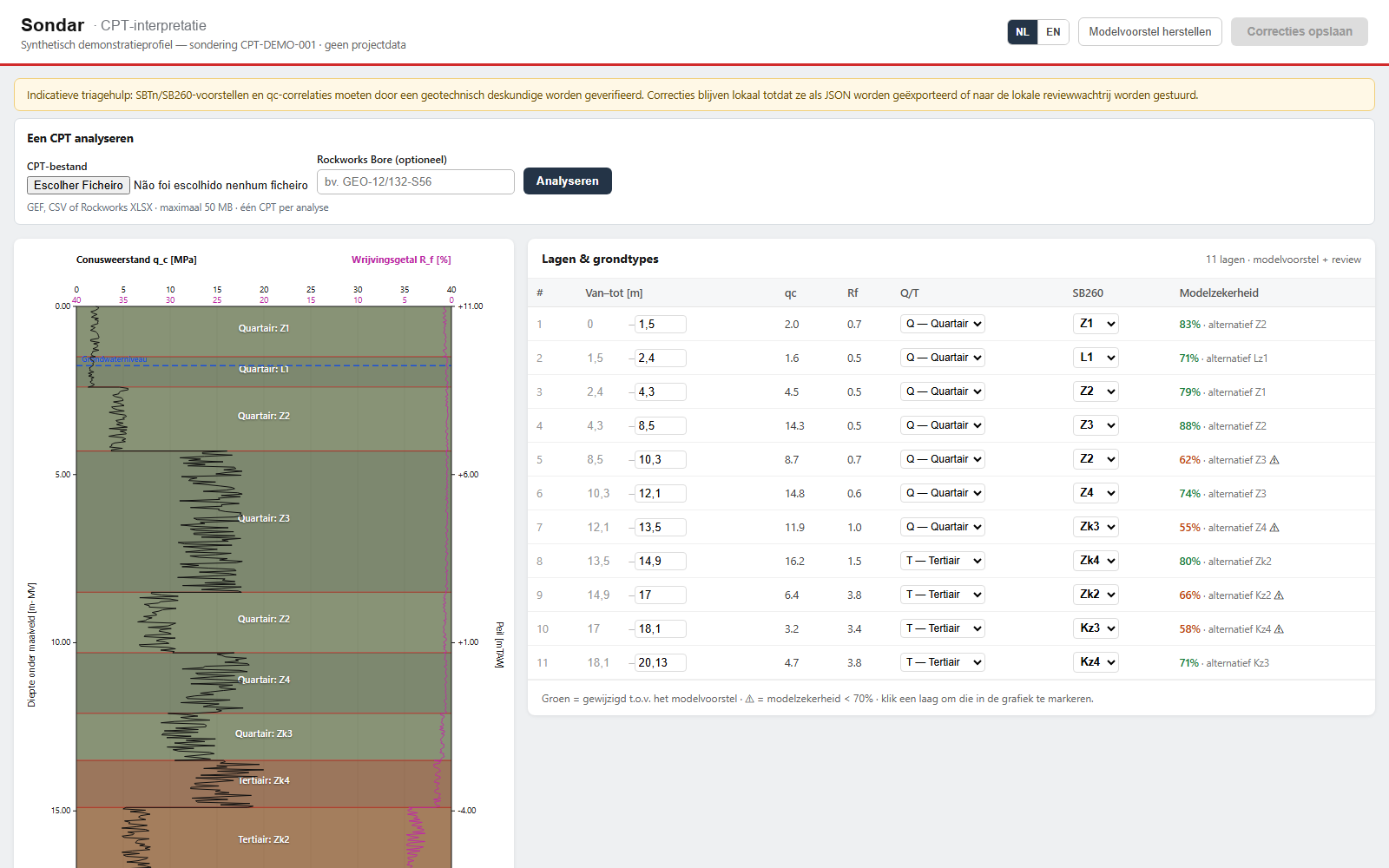
The Sondar app at work — segmented qc/Rf profile, with a proposed classification and confidence per layer (demo data).
PROJECT 02 2025
Sondar · CPT interpretation
A support tool for interpreting cone penetration tests (CPT). It takes the test data, segments the profile into layers and proposes, for each layer, a classification with a confidence level — which the geotechnical engineer reviews, corrects and validates. Layers are editable when the heuristic isn't convincing.
The result comes out as a report and spreadsheet, ready to drop into the dossier. It's currently tuned to the Belgian specification (SB260), and the architecture makes it easy to adapt to other classification standards.
- Context
- Geotechnics · CPT testing
- Principle
- Automatic screening + engineer review
- Stack
- Python · calibrated classification model
- Output
- Proposed layers with confidence · report · spreadsheet
- Reference standard
- SB260 (Belgium) · adaptable to others
- Status
- In development
P·03
OTL Composer
FIG. 032025 · Flanders · real capture
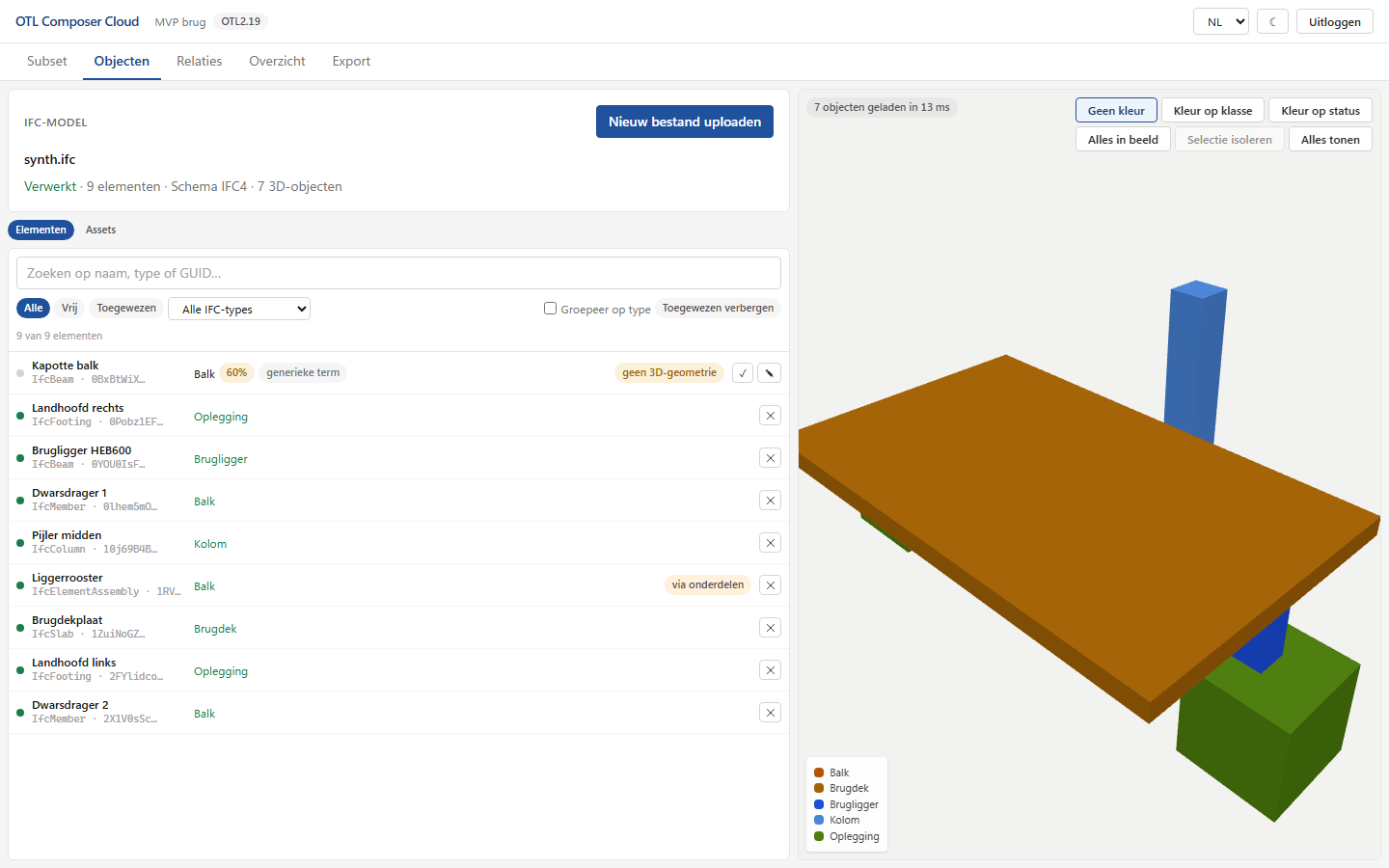
OTL Composer (web version) — IFC model of a bridge with components classified by OTL term.
PROJECT 03 2025 · Flanders
OTL Composer
Applies the Flemish OTL standard to bridges, tunnels and other structures — directly on the model elements. It assigns the typeURI, proposes typed relationships between components (HoortBij, LigtOp…), validates attributes against the OTL model and exports as JSON-LD compliant with the Informatie Vlaanderen specification.
It began as a C# plugin for Revit; today it also exists as a web application that works on IFC files — the same classification engine, independent of the source software.
The project is currently on hold. The path is proven: this process can be automated and simplified inside the design applications themselves — or offered as a web service (SaaS).
- Context
- OTL · structures (kunstwerken) · Flanders
- Forms
- Revit plugin (C#) · web application (IFC)
- Standard
- typeURI · typed relationships · validation · JSON-LD
- Compliance
- Informatie Vlaanderen specification
- Status
- On hold
P·04
Enerveco · internal platform
FIG. 042024 — 2026 · in production
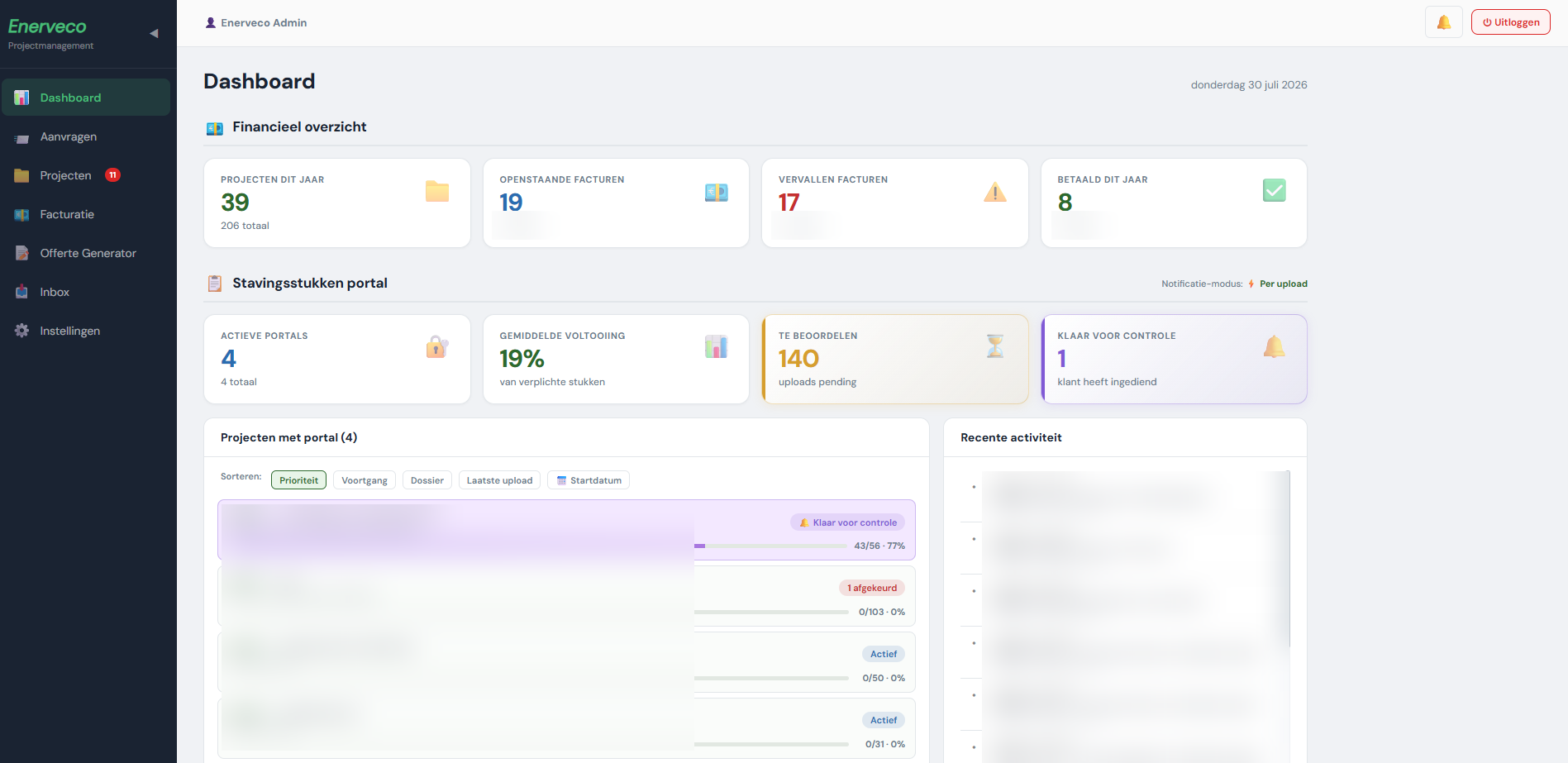
The platform dashboard in production (client data anonymised).
PROJECT 04 2024 — 2026 · Flanders
Enerveco · internal platform
Complete internal platform for Enerveco — a technical-reporting company in Flanders (EPB, ventilation, rioleringskeuring). It manages project dossiers, generates server-side rendered PDF proposals, links email history to each project, syncs documents with the local NAS and includes a client portal with tracking of delivered documents.
It replaced scattered Excel files and loose folders — today every request, proposal, invoice, file and message lives in one place. Under continuous development since 2024.
- Client
- Enerveco · technical reporting · Flanders
- Modules
- Dossiers · proposals · invoicing · inbox · client portal
- Stack
- Node.js · React · SQLite · Docker
- Status
- In production · continuous development
P·05
MihariE · Android app
FIG. 052025 · real captures
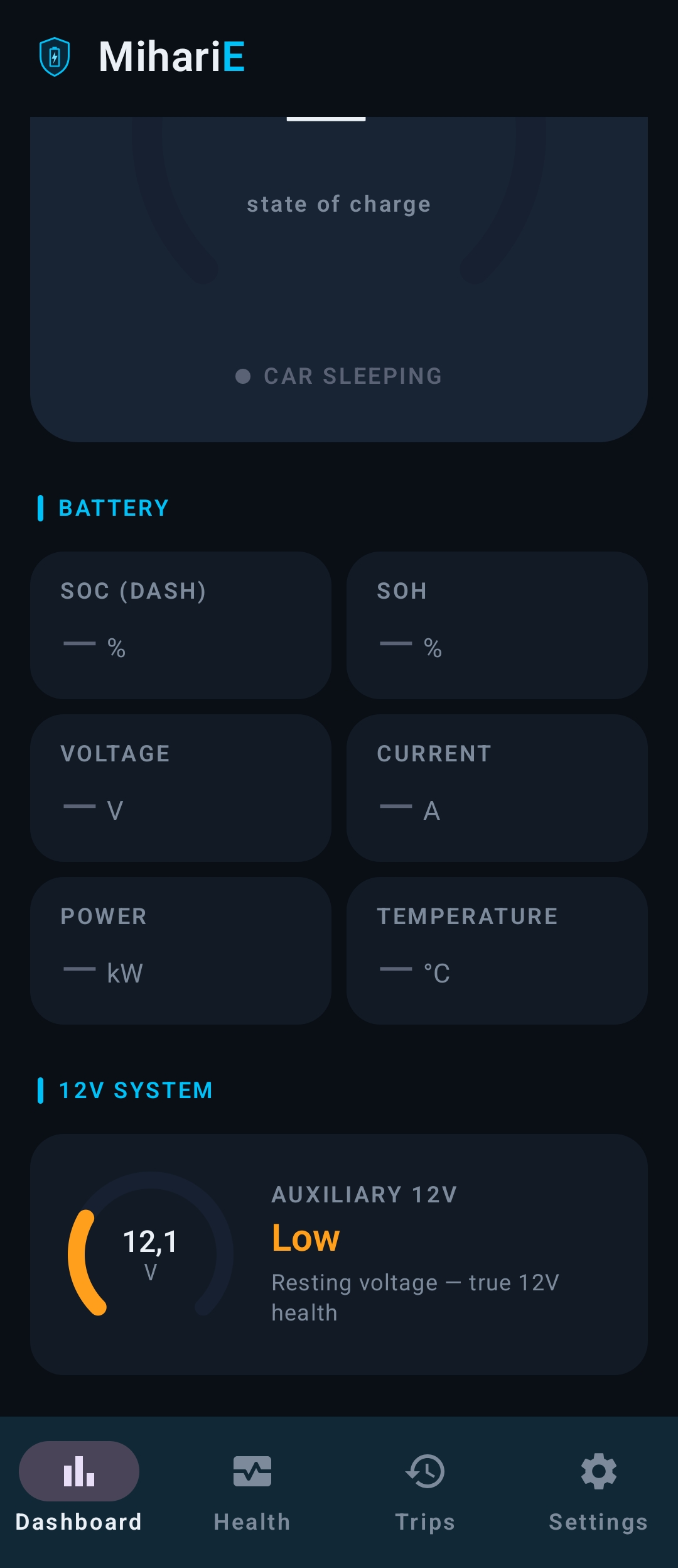
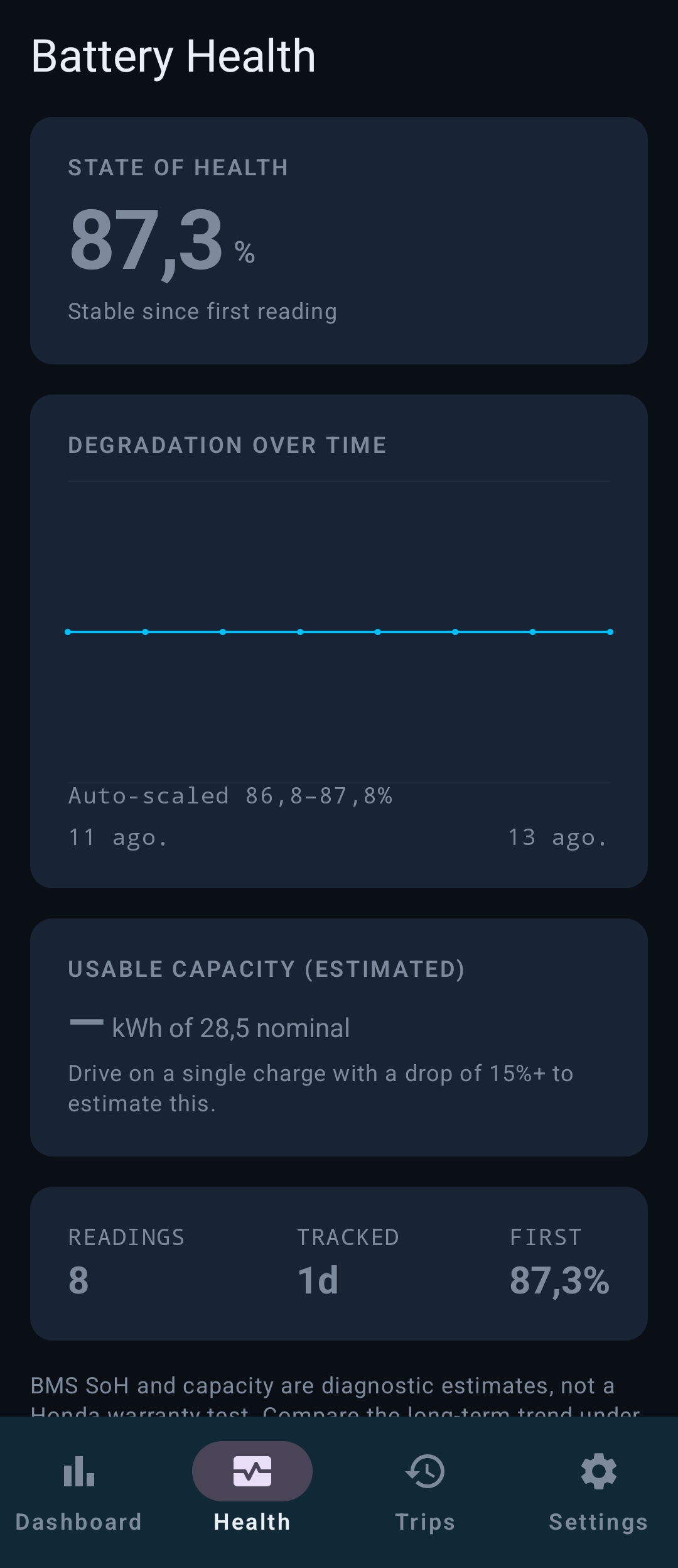
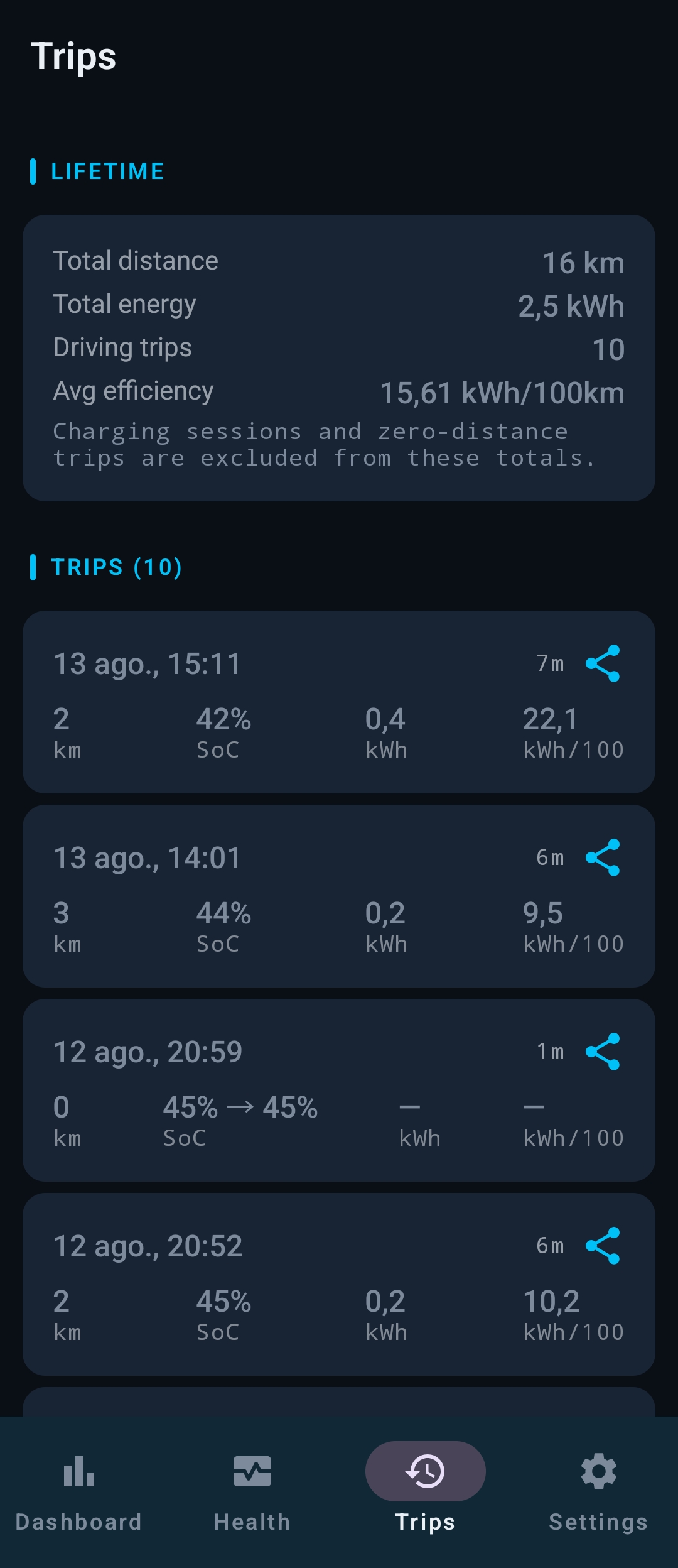
App boot screen · low-voltage alert on the 12 V battery · battery health (SoH) · trip log — real captures.
PROJECT 05 2025 · own project
MihariE · Android app
A private, read-only Android app for the Honda e (見張り, "to watch over"). It connects to the car via OBD/UDS and focuses on what real-time apps don't: tracking battery health and consumption over time. It builds the real degradation curve (SoH per trip), detects trips automatically and watches the 12V auxiliary battery.
100% passive reading — it never writes to the vehicle. Much of the data is undocumented by Honda: it required reverse-engineering the diagnostic protocol, with each reading validated against the real dashboard.
The app is in daily use and has proved genuinely useful — for example, for knowing the real state of the 12 V auxiliary battery before it fails. If there is interest, RFAS will publish it on Google Play at an accessible price; depending on uptake, an iOS version will follow.
- Context
- Honda e · battery and consumption data
- Method
- Reverse engineering · validation against the dashboard
- Reading
- 100% passive via OBD/UDS
- Stack
- Kotlin · Android
- Status
- In daily use · Google Play under consideration
Note · Next on the list
The next project could be yours.
If any of these examples reminded you of a problem you have, that's where we start. If it's something completely different, even better — the most interesting projects tend to be the ones not yet on this list.