DOC 01 RFAS Unipessoal Lda · est. 2020 · rev 2026.07

Engineering that thinks.
Code that saves hours.

Engineering consultancy with a digital arm: bespoke tools, automations and dashboards — no subscriptions, no unnecessary complexity.

Table 01 · General data

01 · Core Engineering Technical consultancy and project organisation
02 · Code Bespoke Plugins, scripts, web apps and internal tools
03 · Data Readable Dashboards and sheets that say what matters
04 · Price Fixed Controlled scope, no heavy systems
§ 01 Strategic · 2026 — 2030

DOC 02 OTL Portugal

Object Type Library. The missing piece between BIM and assets.

Seven years of Flemish practice in Object Type Library, being transposed methodologically to Portugal. I work at the Flemish road agency designing the model; RFAS is the vehicle to bring it here in time for the 2026–2030 window.

≈ 7 000 kmunder OTL in Flanders
+10 yearssince OSLO (2012)
2027BIM pilot · DL 10/2024
§ 03 Recent work

Projects that show the method.

Two short examples of the kind of problems RFAS usually solves — between engineering and code. The full set is in projects.

FIG. 012025 · Flanders
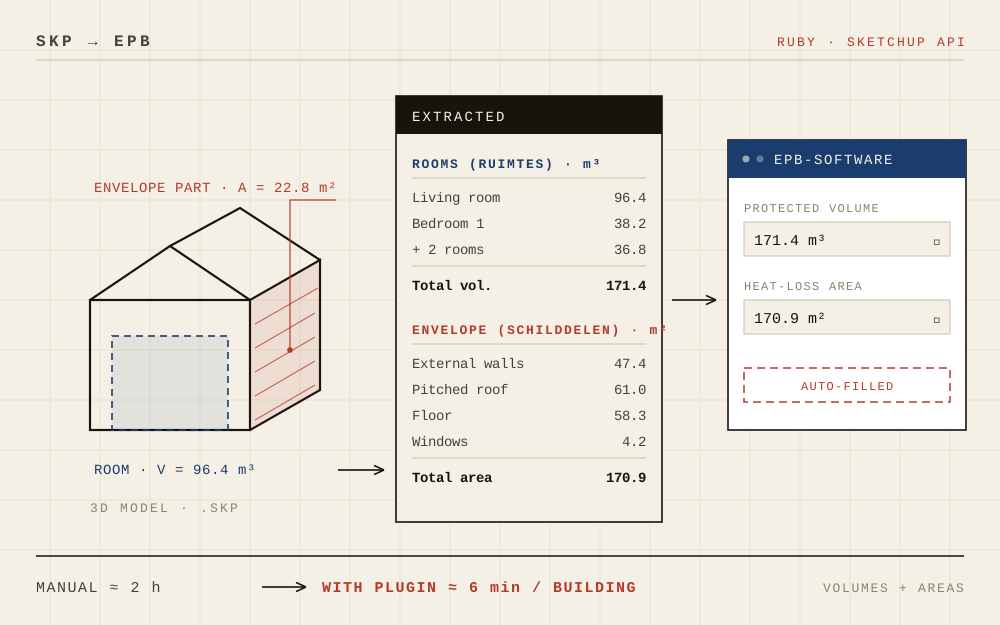
Technical diagram: SketchUp model with one space and one wall highlighted, a list of extracted volumes per space and envelope areas, and the EPB software filled in automatically
From the 3D model to EPB: volumes per space (ruimtes) and envelope areas (schilddelen) — from 2 h to 6 min per building.

SketchUp → EPB

Project 01

Automatic extraction of volumes per space and areas of the envelope elements from the SketchUp model, straight into the EPB energy-certification software of Flanders (Belgium).
Ruby SKP plugin EPB · Flanders
FIG. 022025 · real capture
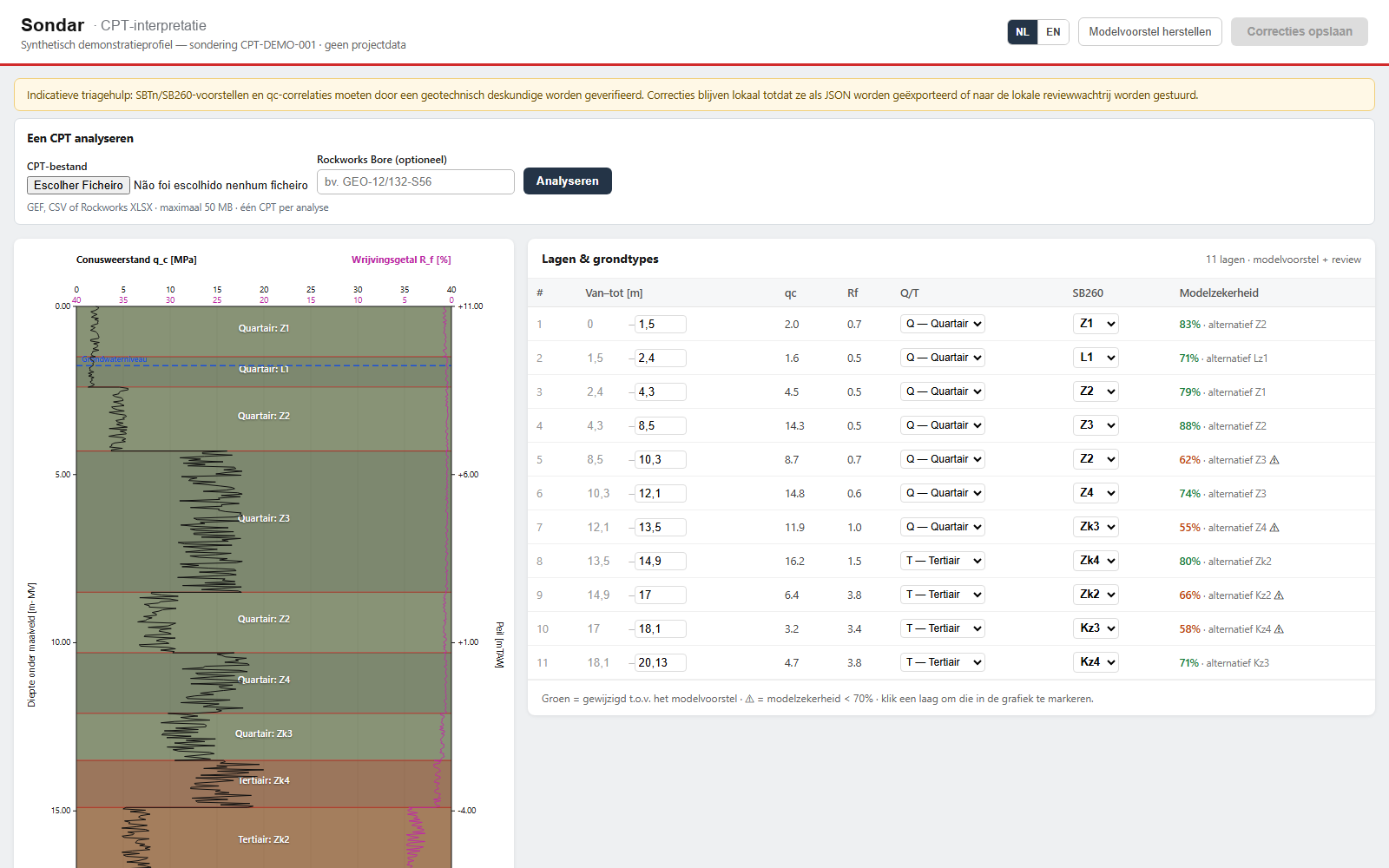
Sondar app: CPT profile with qc and Rf curves, coloured soil layers and a table of classification proposals with model confidence per layer
The Sondar app at work — segmented qc/Rf profile, with a proposed classification and confidence per layer (demo data).

Sondar · CPT

Project 02

CPT test interpretation: segments the profile into layers and proposes a classification for each layer with a confidence level, for review by the engineer. Currently tuned to the Belgian SB260 specification — easily adaptable to other reference standards.

Python Geotechnics SB260 · adaptable
§ 04 Working method

Four steps. No theatrical processes.

Every project starts by looking at the actual problem — the files, the full workflow — to see whether the simple solution is enough. When it is, we stop there.

STEP 01

Diagnosis

Analysis of the situation from concrete examples of the full workflow or problem — real files, sample cases, the end-to-end process.

STEP 02

Proposal

A short document: scope, timeline, cost. No fine print. No mandatory subscriptions.

STEP 03

Build

Intermediate iterations are delivered along the way. Adjust early, avoid rewriting at the end.

STEP 04

Delivery

Files, code or tool + a short manual. The client becomes autonomous; support stays available.

Note · Next step

Have a repetitive process, a manual calculation or an idea that doesn't exist anywhere yet?

Explain in two lines. The reply comes with a practical suggestion — even if it's to say it isn't worth doing.